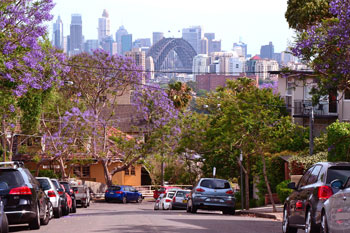
Traditional Chinese Medicine for Neutral Bay
Josephine treats a wide variety of issues, including acute muscle pains and also more complex health conditions that may have accompanied a patient for many years.
Your first visit will usually include a consultation similar to that of visiting your GP in a private consultation room, where you can discuss your health concerns and the reason for your visit.
You will also be asked a series of questions in relation to your health to gain a clear picture of your past and present health condition. Diagnostic techniques used by a TCM practitioner will usually include checking your pulse and observation of your tongue.
Yang deficiency (Yang Xu) is a pattern of insufficient Yang — the body's warming, activating, and transforming force. When Yang is depleted, the body loses its ability to generate warmth, drive metabolism, and maintain active function. Yang deficiency often develops as a progression from Qi deficiency: chronic Qi depletion eventually weakens Yang, adding cold signs to the existing weakness. The Kidneys are the root of all Yang in the body, so Kidney Yang deficiency is considered the most fundamental form.
The defining symptoms of Yang deficiency are cold signs combined with weakness: cold limbs (especially hands and feet), intolerance of cold, pale bright-white complexion, fatigue and lethargy, preference for warm food and drink, clear abundant urination, loose stools (especially early morning diarrhoea, called "cock-crow diarrhoea" in classical texts), low libido, and oedema. The tongue is pale, swollen, and moist with a white coating. The pulse is deep, slow, and weak.
Spleen Yang deficiency produces digestive weakness with cold abdomen and undigested food in stools. Kidney Yang deficiency adds low back and knee coldness, reduced sexual vitality, and frequent night-time urination. Heart Yang deficiency manifests as chest oppression, cold sweats, and in severe cases, cyanosis. Treatment warms Yang using moxibustion (a highly effective technique for this pattern), warming herbs such as Fu Zi (prepared Aconite), Rou Gui (cinnamon bark), and Du Zhong (Eucommia bark), and acupuncture at points like RN-4 (Guanyuan) and GV-4 (Mingmen) with warming needle technique.
Yang deficiency produces cold limbs, intolerance of cold, fatigue, pallor, preference for warmth, loose stools, clear frequent urination, low energy and libido, and oedema. The tongue is pale and swollen with a white coating. It represents the body's inability to generate sufficient warmth and metabolic activity.
Moxibustion generates deep, penetrating warmth by burning mugwort at acupuncture points, directly tonifying Yang Qi. Points like RN-4 (Guanyuan), RN-6 (Qihai), and GV-4 (Mingmen) are commonly treated with moxibustion to warm the Kidneys and restore the body's foundational Yang, making it one of the most effective treatments for cold-type deficiency patterns.
Josephine Zhuo (TCM) is an AHPRA registered health practitioner — acupuncturist and herbalist.
Book OnlineOr call to make a booking
Root-cause diagnosis for each patient's body constitution and health condition.
All seasons of women's health, from menarche through pregnancy to menopause.
AHPRA registered. Individualised care through acupuncture and herbal medicine.
Acupuncture, cupping, moxa and herbal medicine used in combination.
The name "Neutral Bay" originates from the time of the early colonial period of Australia, where different bays of Sydney harbour were zoned for different incoming vessels. This bay was where all foreign vessels would dock, hence the name neutral.
The Aboriginal name for the area was 'Wirra-birra'. In 1789, soon after the arrival of the First Fleet in Sydney, Governor Arthur Phillip declared this bay a neutral harbour where foreign ships could anchor and take on water and supplies. Neutral Bay was far enough away from Sydney Cove to discourage convicts from escaping on these vessels and to keep possible enemy ships at a distance from the main settlement.
By the beginning of the 20th century, Neutral Bay and Cremorne were developing as "alternative society suburbs", populated by the kind of people who were attracted to the Arts and Crafts architectural style that was in vogue at the time. This style was an attempt to get away from mass production and give homes the "human touch". Notable examples soon appeared in the area. Brent Knowle, in Shellcove Road (now part of Kurraba Point), was designed by Bertrand James Waterhouse and built in 1914. It influenced home design in the area for at least the next fifteen years and has a state heritage listing.
Neutral Bay was also the home of the English-born children's author and painter May Gibbs, who lived for a time in Derry, a two-storey Federation home in Phillips Street. Afterwards, she moved to the home Nutcote in nearby Kurraba Point.
All information on this website is provided as general health information. While we have exercised due care in ensuring the accuracy of the material contained on this website, the information on the site is made available on the basis it does not constitute providing professional medical advice on a particular matter. This website is not a substitute for independent and separate professional medical advice. Nothing contained in this site is intended to be used for specific diagnosis, treatment, cure or prevention of any symptoms, diseases or conditions, nor should it be a substitute for your own health professional's advice. We do not accept any liability for any injury, loss or damage incurred by use of or reliance on the information provided on this website.
Chinese Medicine Doctor near Neutral Bay, Acupuncture for insomnia near Neutral Bay, Acupuncture for pain relief near Neutral Bay, Acupuncture for anxiety near Neutral Bay, Herbalist near Neutral Bay, Maintaining health near Neutral Bay, Moxibustion near Neutral Bay, Cupping near Neutral Bay, Acupuncture for weight loss near Neutral Bay, Cosmetic acupuncture near Neutral Bay.
Book your appointment with Josephine Zhuo today